Winter sports report
 Webcams
 Hiking and Bike Tours
 Events
 Vouchers
Scuol, the spa capital of the Alps
Drinking and spa cures in the Lower Engadine
As early as 1369, Vogt Ulrich von Matsch first recorded the mineral springs in writing. In 1533, the famous physician Paracelsus studied their effects, and in 1561 the Zurich naturalist and polymath Conrad Gessner described them as a ‘true wonder of nature’. In the 19th century, this gave rise to a thriving spa industry catering to guests from all over the world, who travelled there for drinking and bathing cures lasting several weeks. New roads and, from 1913, the Rhaetian Railway shortened the formerly arduous journey by many hours. Most of the region’s imposing hotels and spa centres were built during its heyday between 1864 and 1915.
Just over a hundred years ago, Scuol was known as Bad Schuls and was regarded as the glamorous ‘Queen of the Alpine Spas’. Many spa guests returned every year – not only for health reasons, but also for the sociable spa life. With the opening of the Büvetta Tarasp drinking hall (1876), the drinking cure gained its prestigious centrepiece. Finally, the construction of the Bogn Engiadina Scuol mineral baths (1993) marked the beginning of a new chapter in the region’s bathing and wellness culture.


A drink, a walk, a chat
The drinking cure: Curas da baiver
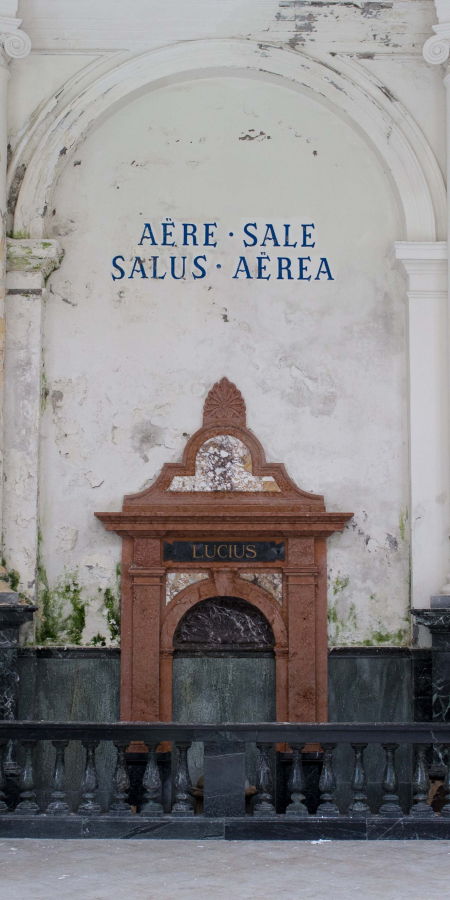
The drinking cure, known in Romansh as ‘Curas da baiver’, was at the heart of the spa’s operations. In accordance with the beliefs of the time, the mineral water was drunk in specific quantities and at specific times, whilst guests would take a stroll in the promenade hall of the Büvetta Tarasp or in the spa gardens between sips. The Büvetta, which opened in 1876 in the Inn Gorge near Nairs, was the premier venue for drinking cures. Among others, the Lucius and Emerita springs were tapped here. The listed complex, designed by the architect Bernhard Simon, brought together the springs, architecture and the spa community. The writer Friedrich Dürrenmatt drew inspiration from this area and wrote his novel *Durcheinandertal* here.
The rigour of the noble drinking cure
Despite the glamour of the grand hotels and the aristocratic clientele, a drinking cure in the 19th century was by no means merely a pampering programme. Daily life demanded iron discipline: guests had to rise as early as 5 o’clock in the morning to begin the cure. Precisely prescribed quantities of mineral water were drunk in small sips, interspersed with long carriage rides or walks in the promenade hall to stimulate digestion. One doctor described the day-filling treatment schedule as ‘almost a monastic life’ (Karin Fuchs, 2019).